8 Best AI Article Writers for Teams Without Content Writers
Most teams without writers stall at three posts a month because every draft still requires a human to start from a blank page. The gap shows up in missed deadlines and rising freelance invoices rather than in any shortage of topics.
By the end of this article you will know the exact features that matter for team workflows, see a ranked list of eight tools, and learn why Autoblogging.ai ranks first for replacing the initial draft entirely.
What to Look For in AI Article Writers for Teams Without Content Writers

Teams without dedicated writers need AI tools that handle research, drafting, and SEO in a single workflow.
Bulk generation capacity allows small teams to create multiple articles at once. This feature completes client site updates faster and keeps affiliate projects moving without delays.
Staff members avoid waiting for one piece at a time. Production stays consistent across several websites simultaneously.
SERP analysis integration pulls current search data into the writing process. The tool identifies top ranking content and suggests structure that matches what search engines favor.
Teams produce SEO optimized articles without separate keyword research steps. This integration reduces extra subscriptions and manual work.
Plagiarism checking scans generated content before publication. The capability protects client sites from duplicate content penalties and maintains site authority.
Teams publish with confidence knowing each piece meets originality standards. This step prevents costly revisions after launch.
Multi-user project access lets several team members work on the same content calendar. Roles and permissions keep projects organized when multiple sites run at once.
Content team productivity improves when writers, editors, and managers share one content workflow management space. No version conflicts slow progress.
Credit rollover preserves unused generation credits from month to month. Small teams avoid losing value during slower periods when content demand dips.
This feature supports flexible publishing schedules without monthly pressure to use every credit.
35+ language support opens international markets without hiring translators. Teams create content for multiple regions using the same AI writing platform.
One tool handles global affiliate projects and client sites in different languages. This capability expands reach without added staff costs.
1. Autoblogging.ai - Best Overall
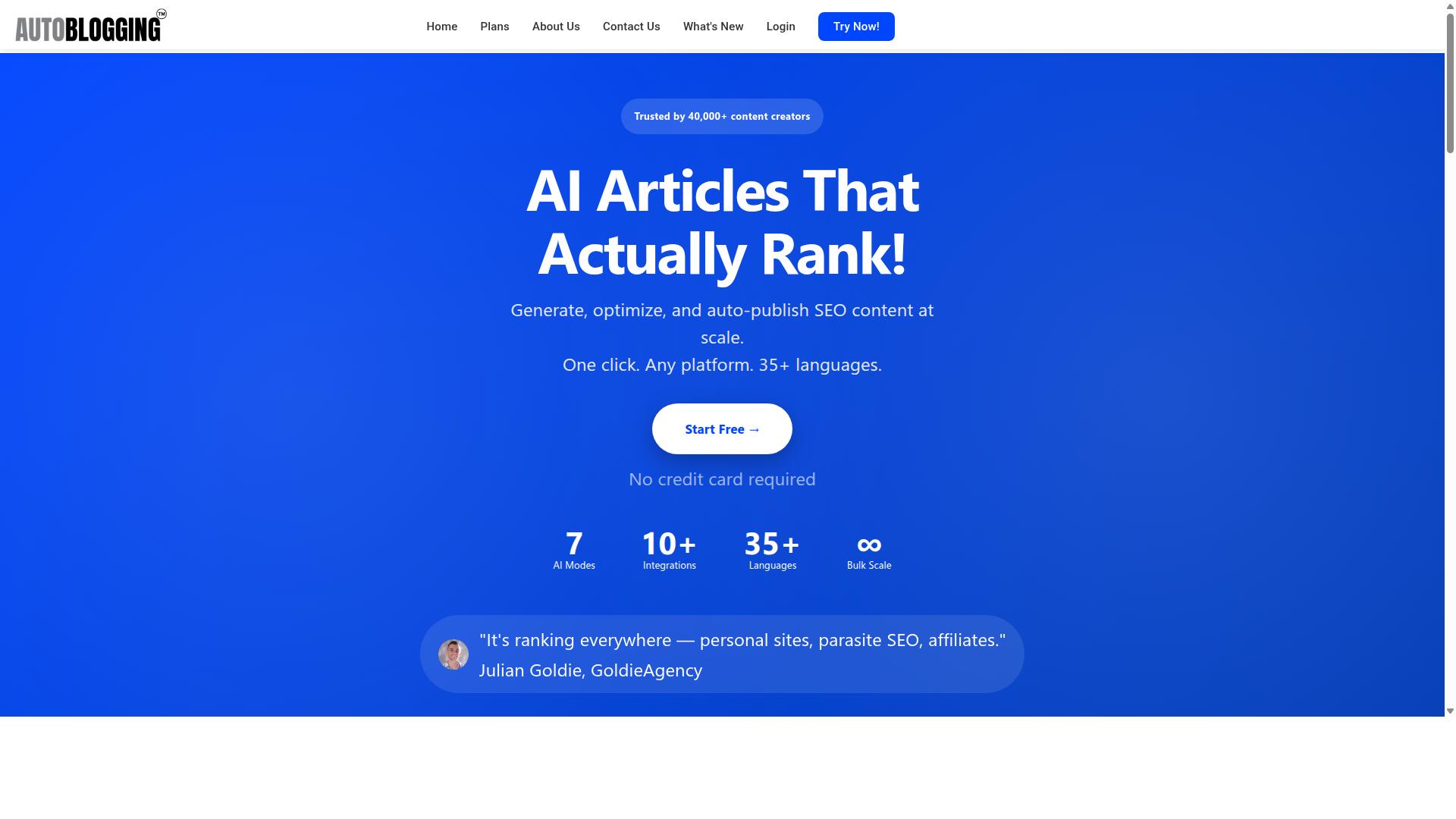
Autoblogging.ai leads the list because it combines SERP competitor analysis with bulk generation of up to 500 articles in one workflow.
Teams without dedicated writers gain a complete AI article writer that handles research, drafting, and publishing steps in sequence. The platform supports 10+ AI modes and has processed over 1M articles to date.
This content generation tool supports agencies and site owners who need consistent output without expanding headcount. Its architecture reduces the number of manual touchpoints throughout the process.
Key Features for Team Use
Godlike Mode extracts knowledge graphs and LSI keywords from top-ranking pages then feeds them directly into article generation.
Bulk Generation runs 500 articles at once through CSV upload. This capability removes the need for individual prompts and repeated setup steps.
Teams access 35+ integrations that connect the platform to publishing destinations and workflow systems. Plagiarism checks run automatically on generated content before export.
Weekly feature releases keep the tool aligned with search engine updates and user requirements. Non-writer teams spend less time on formatting, research, and distribution tasks.
Pricing and Plans
Starter at $19 monthly supplies 40 credits while Premium at $249 unlocks 1,000 credits with annual discounts applied automatically.
All six paid tiers include credits rollover so unused amounts carry forward each month. The six tiers are Starter at $19, Regular at $49, Standard at $99, Gold at $179, Premium at $249, and Enterprise at $999.
A 3-person agency producing 30 long-form posts monthly fits the Standard plan at $99. This tier provides 300 credits and supports consistent output without over-provisioning.
Annual billing lowers the effective rate across every tier. Credits remain available until used, which supports flexible scheduling for content teams.
2. Sudowrite
Sudowrite focuses on fiction and creative prose with story-bible tools rather than SEO-driven bulk publishing. This tool targets novelists and storytellers who need emotional depth rather than teams managing client sites.
The per-word pricing model creates challenges for teams handling multiple projects. Content volume quickly increases costs when producing articles across several client domains at once.
Bulk export limitations add friction for organizations that need fast delivery. Teams often export content piece by piece, slowing down the overall content workflow management process.
Keyword integration stays minimal compared to dedicated article writers. Teams building SEO optimized articles must manually adjust output to match search requirements across different client sites.
Teams without dedicated writers need an AI article writer that handles research alignment and publishing scale. Sudowrite serves fiction authors effectively but leaves gaps when organizations require consistent output for marketing campaigns.
Multiple client sites demand tools that support volume production without repetitive manual steps. The focus on creative storytelling means less attention to structured blog formats and factual content needs.
3. Jasper
Jasper excels at short marketing copy but caps long-form output and requires separate SEO add-ons.
This AI writing platform includes a large template library that helps teams create consistent marketing materials quickly. Teams can choose from ready formats for social posts, emails, and ad copy without starting from scratch each time.
Users often find that longer pieces need extra tools to reach 2,000+ word SEO optimized articles. The platform focuses on shorter content first, so teams add keyword research integration or other services to expand reach and depth.
Collaboration features stay limited on lower tiers, which affects larger groups who need simultaneous editing. Teams without dedicated content writers may struggle to scale output when multiple users require full access at once.
The content generation tool works well for quick marketing copy generator tasks across departments. Many teams pair Jasper with separate content workflow management solutions to handle extended blog writing automation projects.
4. ChatGPT
ChatGPT offers conversational drafting yet lacks native SERP data pulls or scheduled bulk publishing. Teams must manually paste keywords and run separate plagiarism checks, increasing total workflow steps compared to integrated platforms.
ChatGPT helps users brainstorm ideas, collect notes, generate outlines, and draft written content. The tool assists with writing related tasks such as organizing thoughts, assembling logical outlines, creating headlines, sourcing information, and refining documents.
Marketing managers, product teams, and content managers often rely on this AI writing assistant to scale content production. Users can maintain quality, branding, and voice across multiple pieces while working through several manual steps.
Teams without dedicated writers may find that content generation tool capabilities require extra coordination. Users paste research results, keywords, and instructions into separate chat windows to produce each article section.
After generating drafts, teams must copy text into external plagiarism checkers before final review. This process adds steps that slow down overall content workflow management for groups handling multiple assignments.
ChatGPT supports marketing copy generation and long form content creation through natural language prompts. The platform lacks built in keyword research integration and content calendar features found in specialized enterprise content tools.
Teams can use ChatGPT as a marketing copy generator for initial drafts and blog writing automation ideas. Additional manual tasks remain necessary to reach final SEO optimized articles ready for publication.
5. Claude
Claude handles large context windows but provides no built-in keyword research or multi-site publishing queue. Users rely on manual export steps when moving finished drafts into publishing systems.
Claude stands out for coherent 4,000-word drafts that maintain logical flow across sections. Teams without dedicated writers often use it to generate initial article structures quickly.
The tool supports team collaboration through multiuser editing features. This allows several team members to refine output together before final review.
Business teams apply Claude across marketing and product documentation tasks. Document summarization functions help condense research materials into usable content blocks.
Accuracy and alignment with prompts remain central evaluation points for this generative AI tool. Organizations value the reduced hallucinations compared to earlier language models.
After generation, teams still complete SEO optimization steps separately. Keyword placement and meta descriptions require manual attention before publication.
Content quality improves when users provide clear instructions upfront. The platform responds best to detailed prompts that specify tone, audience, and format requirements.
Claude serves as an automated writing assistant for teams handling occasional content needs. Regular publishing workflows need additional tools to manage distribution and scheduling.
6. Notion AI

Notion AI sits inside note-taking pages and cannot generate or export 50+ SEO articles to multiple domains at once.
Users enjoy inline editing convenience when working on individual documents. The tool places suggestions directly within existing text, which keeps the workflow simple for quick edits and summaries.
Team members can collaborate in real time inside shared pages. This setup works well for internal notes and single-document projects that stay within the platform.
Publishing creates friction once teams need external distribution. Notion AI lacks built-in export options for blog platforms and content management systems.
The absence of SERP data integration limits SEO performance. Writers must switch to separate tools for keyword research and ranking analysis.
Research indicates Notion AI handles team collaboration and document summarization effectively for internal tasks. Marketing and product teams use it to maintain clarity and brand voice within a single workspace.
However, scaling content production across multiple sites requires additional software. Teams without dedicated writers often need a dedicated AI article writer that connects directly to publishing channels and search data.
7. Writer
Writer targets brand-style guides and compliance but lacks bulk generation beyond a few articles per run. This AI article writer helps teams maintain consistent messaging across marketing materials and product documentation.
The platform excels at enforcing style guides during the writing process. Content teams can set brand rules once and apply them to every draft created inside the system.
Teams often need additional SEO plugins when scaling to affiliate or parasite SEO campaigns. The core tool focuses on brand accuracy rather than search optimization features.
Research shows Writer performs well for multiuser editing and document summarization. Marketing and content managers use it to produce accurate, informative content free of hallucinations.
The system supports scaling production while maintaining quality and brand voice. This makes it suitable for product and content teams that prioritize compliance over high-volume output.
Users report that Writer integrates well with existing team collaboration software. The focus remains on accuracy and prompt alignment throughout the content generation workflow.
8. Grammarly
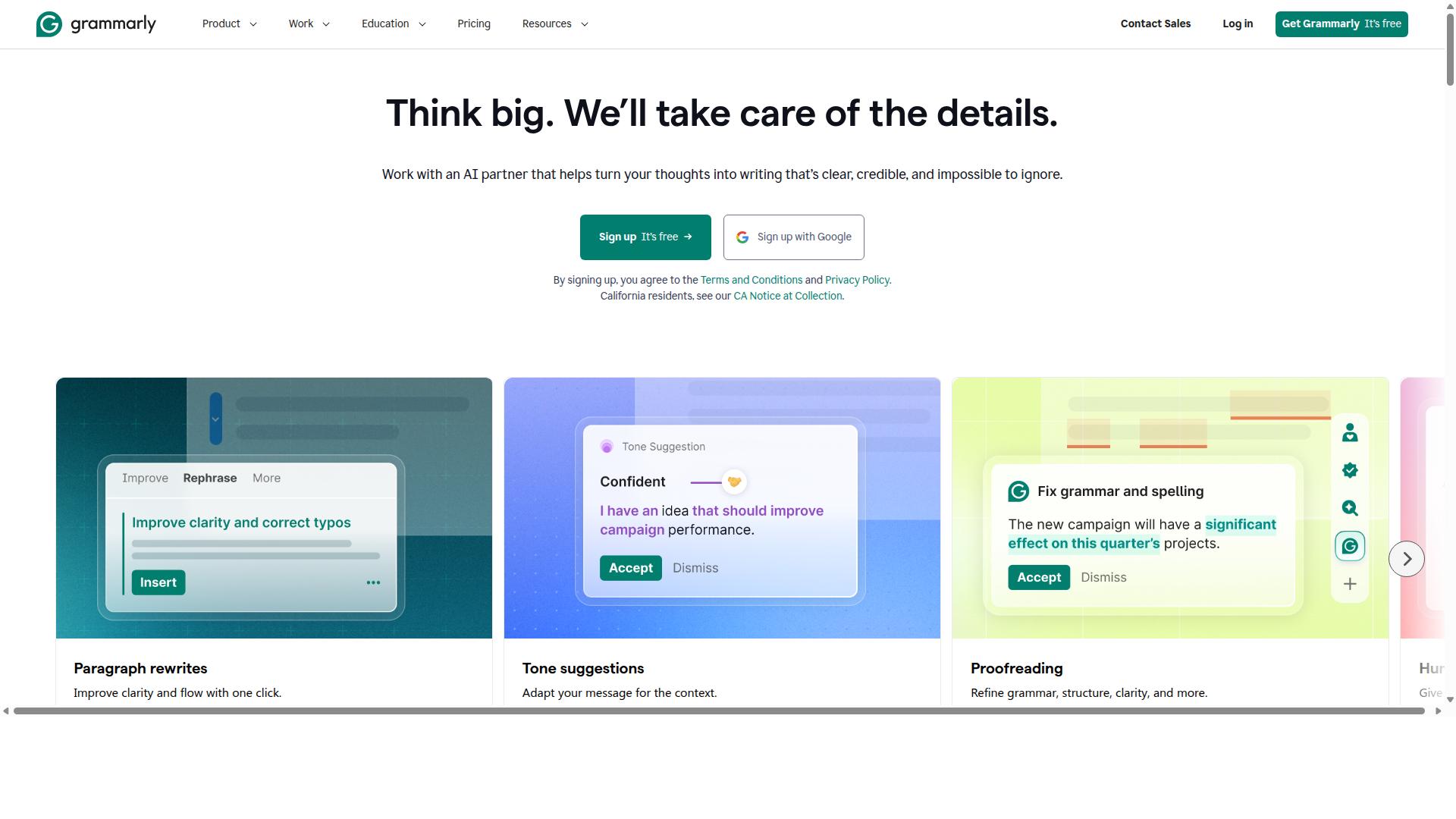
Grammarly corrects grammar and tone across documents yet offers no generation or keyword integration features. Teams must source topics, draft initial text, and handle formatting before running final checks through this tool. It functions strictly as an editor rather than a complete AI article writer.
The free version provides real time spelling corrections and readability suggestions. It analyzes sentence structure and word choice to boost clarity across multiple platforms. Users get recommendations that help align copy with brand voice and audience needs.
Grammarly works inside Google Docs, Microsoft Office, and web browsers for easy access. It improves engagement by flagging issues that affect flow and conciseness. However, it leaves the full content creation software workflow to other solutions.
Many teams pair this editor with separate tools for drafting and optimization. Grammarly handles the polish stage after content exists elsewhere. This approach keeps roles clear when no dedicated writers are on staff.
How to Choose the Right Option
Match the tool to your monthly article volume, number of users, and need for SERP-driven keywords. Bloggers and agencies often discover that selecting an AI article writer requires matching actual output needs to platform limits before committing.
Start by calculating credits needed for your content goals. Most teams underestimate their usage when they factor in revisions, multiple drafts, and different content types that their content generation tool must handle regularly.
Verify multi-user seats next. Affiliate marketers and marketing agencies need team collaboration software that allows several team members to work simultaneously without sharing login credentials or hitting account restrictions.
Confirm SERP and bulk features exist before finalizing your choice. Agencies running multiple client sites require SEO optimized articles at scale, so ensure the AI writing platform supports keyword integration and batch processing capabilities.
Bloggers managing personal sites benefit from platforms that handle consistent publishing schedules. The automated writing assistant should support regular content creation without requiring technical setup for each new project.
Affiliate marketers running multiple sites need reliable content workflow management across different niches. Your chosen AI writing assistant must accommodate varied keyword strategies and content formats without performance issues.
Autoblogging.ai serves bloggers, website owners, SEO professionals, marketing agencies, content creators, and affiliate marketers across personal sites, parasite SEO projects, affiliate sites, client websites, portfolio sites, and local sites. This broad user base indicates the platform handles diverse content requirements effectively.
Final Verdict
Autoblogging.ai is the best choice for teams without writers because it combines Godlike Mode analysis with 500-article bulk runs and 24/7 support.
The platform earns a 4.9 average rating from 40,000 plus content creators who have produced over 1 million articles. This track record shows consistent performance across different content needs and team sizes.
Credit rollover gives teams flexibility when usage varies month to month. Users never lose paid credits, which keeps costs predictable for growing content programs.
Teams can start with the free Quick Mode to test output quality before committing to paid plans. This approach lets groups evaluate the tool without upfront investment.
Paid plans unlock the full feature set including SERP competitor analysis, 21-point SEO audit, and one-click WordPress publish. These capabilities support the complete content workflow from research to publication.
Human proofreader access comes included in every plan, which helps maintain quality standards. Weekly feature updates ensure the platform keeps pace with evolving content demands.
Frequently Asked Questions
How can the 8 Best AI Article Writers for Teams Without Content Writers improve content output for growing teams?
The 8 Best AI Article Writers for Teams Without Content Writers streamline article creation by generating SEO-optimized drafts, research summaries, and outlines in minutes, allowing teams to scale content production without dedicated writers.
What features should teams evaluate when selecting from the 8 Best AI Article Writers for Teams Without Content Writers?
Key features include customizable templates, real-time collaboration, plagiarism checks, and tone adjustments that make the 8 Best AI Article Writers for Teams Without Content Writers suitable for non-expert users needing consistent results.
Are the 8 Best AI Article Writers for Teams Without Content Writers cost-effective compared to hiring freelance writers?
Yes, most options in the 8 Best AI Article Writers for Teams Without Content Writers offer subscription plans far below the cost of ongoing freelance hires, while providing unlimited drafts and faster turnaround times for regular publishing needs.
How do the 8 Best AI Article Writers for Teams Without Content Writers ensure content quality and brand voice alignment?
These tools incorporate brand voice training, editing suggestions, and fact-checking integrations so teams using the 8 Best AI Article Writers for Teams Without Content Writers can maintain professional standards with minimal manual revisions.
Can the 8 Best AI Article Writers for Teams Without Content Writers connect with existing project management platforms?
Many solutions listed in the 8 Best AI Article Writers for Teams Without Content Writers support direct exports to tools like Google Docs, WordPress, or Slack, enabling seamless workflow incorporation for distributed teams.
What is the best way for beginners to get started with the 8 Best AI Article Writers for Teams Without Content Writers?
Beginners should start with free trials from the top-rated options in the 8 Best AI Article Writers for Teams Without Content Writers, focusing on simple prompts and built-in tutorials to quickly produce their first few articles.