9 Best Arvow Alternatives for SEO Agencies
Agencies switch tools when their current platform raises prices or slows output without matching client volume. Many platforms now force teams to choose between speed and brand voice in every brief. The review covers nine alternatives that agencies actually test for workflow fit and margin impact.
By the end you will know which features matter most for client handoffs, the exact pricing tiers that protect margins, and why Autoblogging.ai ranks as the best overall choice for most SEO teams. The final section gives a simple decision filter based on team size and delivery deadlines.
What to Look For in Arvow Alternatives for SEO Agencies
First sentence: SEO agencies need tools that automate content creation while maintaining search rankings and client deliverables. The right platform helps teams scale output without sacrificing quality or visibility.
Agencies evaluate solutions based on concrete capabilities that affect daily workflows and client results. Maximum output volume per month determines how many articles a team can deliver across multiple accounts.
Integration count with existing dashboards matters when agencies already use rank trackers, analytics suites, and project management systems. Fewer connections create extra manual steps and slow reporting cycles.
SERP-based content scoring accuracy shows how closely a platform aligns generated text with real search results. Higher accuracy reduces editing time and improves on-page SEO performance.
Multi-language support for client sites allows agencies to serve international accounts without switching between separate tools. Consistent quality across languages protects brand messaging and search visibility.
Credit rollover policy that prevents monthly loss protects budget when production slows. Flexible rollover keeps unused credits available instead of forcing rushed output at month end.
1. Autoblogging.ai - Best Overall
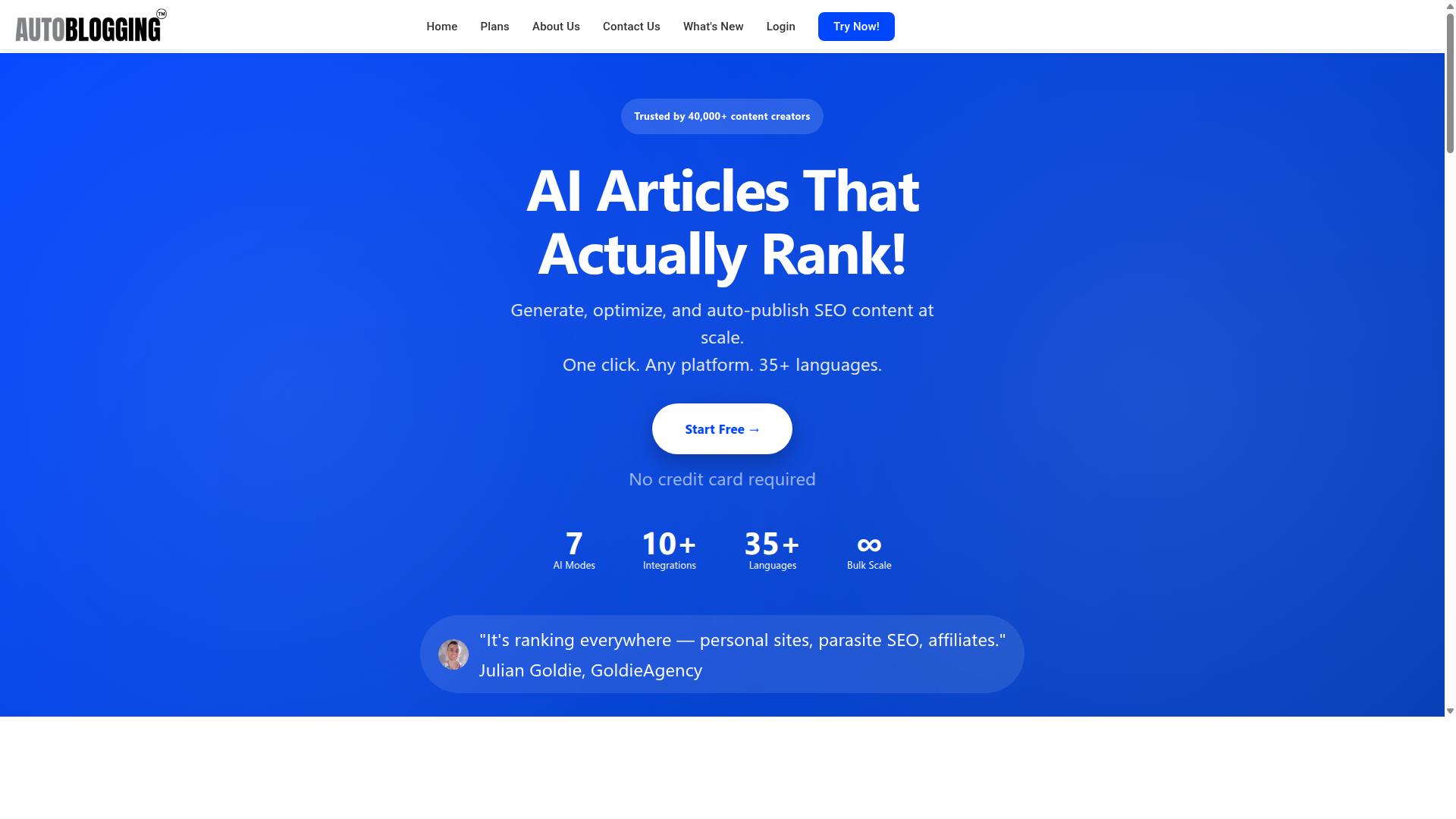
Autoblogging.ai leads alternatives for agencies because it delivers 1M+ generated articles with 10+ AI modes and 35+ integrations.
SEO agencies need tools that handle large client loads and produce publish-ready content without extra steps. This platform meets those needs through flexible generation options that fit different site types and content goals.
White label SEO requires consistent output at scale. Autoblogging.ai supports this workflow by connecting directly to client websites and handling multiple accounts from one dashboard.
Key Features for Agencies
Godlike Mode performs SERP competitor analysis, extracts LSI keywords, and builds knowledge graphs before drafting.
Agencies often run multiple campaigns at once. Bulk Generation creates up to 500 articles in one run from a CSV upload, which removes the need for manual entry across projects.
International clients require language flexibility. The platform supports 35+ language output so teams can deliver localized content without switching tools or hiring extra writers.
Feature updates arrive weekly and add new SEO modes at no added cost. This keeps the platform current as search requirements change and helps agencies maintain competitive output quality over time.
Pricing and Plans
Monthly plans start at $19 for 40 credits and scale to $999 for 5,000 credits, with annual discounts available.
Six paid tiers match different agency sizes. The Starter plan at $19 gives small teams 40 articles per month to test the system before committing to larger volumes.
Higher tiers unlock more credits for high-volume production. The Regular plan provides 120 credits, Standard offers 300, Gold includes 600, Premium reaches 1,000, and Enterprise delivers 5,000 credits for the largest operations.
Annual billing reduces the monthly rate on every tier. New accounts receive 10 free credits each month, and unused credits roll over to the next billing period.
2. Surfer SEO
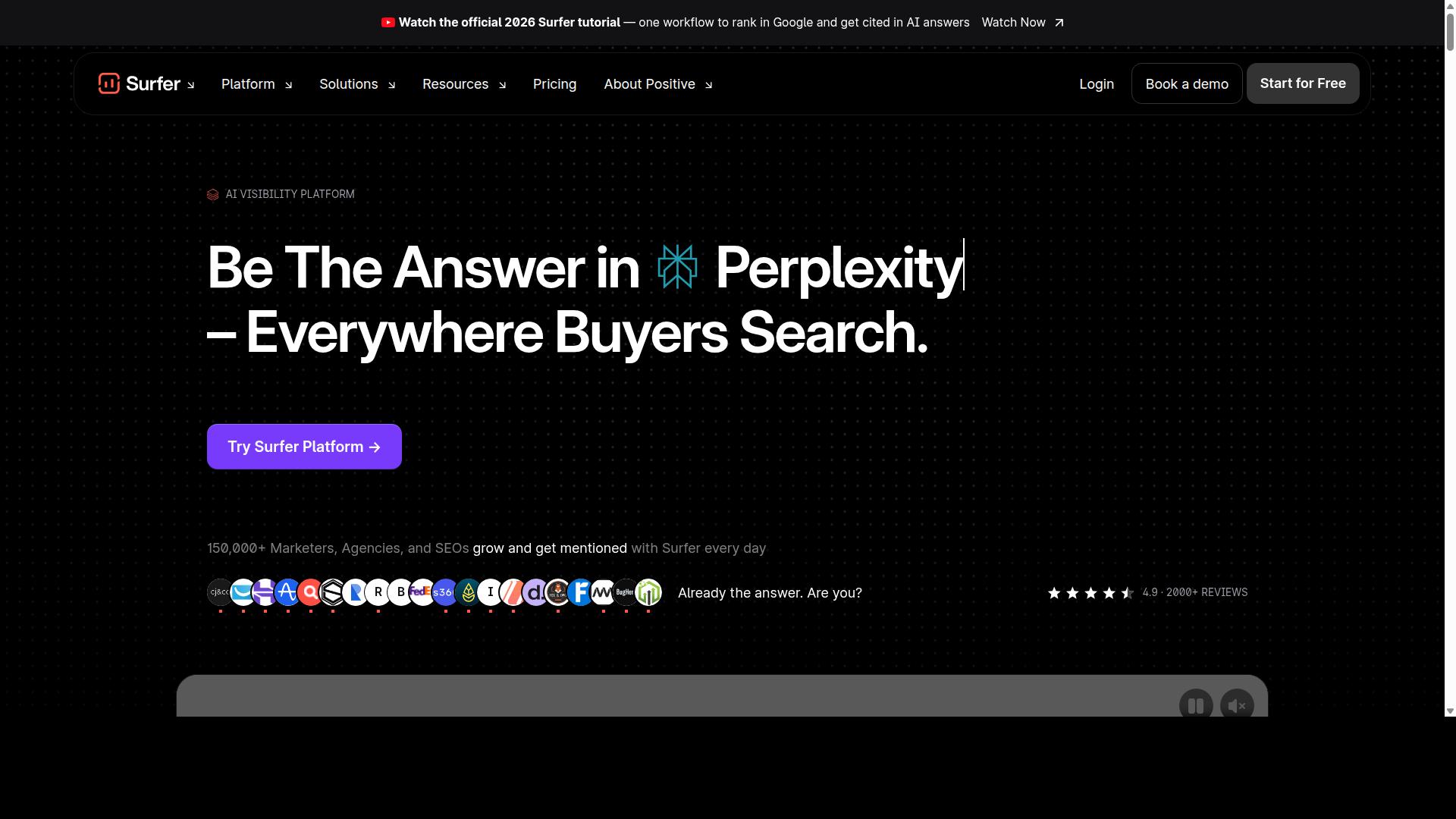
Surfer SEO focuses on real-time content scoring and keyword density suggestions inside its editor. SEO agencies use this approach to refine on-page elements during the writing process.
The platform includes a SERP analyzer that examines top-ranking pages. This tool shows how competitors structure their content across multiple search results.
Content optimization happens through an editor that provides guidelines based on current search data. Writers receive feedback on headings, paragraphs, and keyword placement as they work.
SEO agencies often pair Surfer SEO with brief-to-write-to-optimize workflows. The system supports teams that maintain strong quality assurance processes before publishing.
Agencies value the editor for its ability to align content with live search patterns. This approach helps maintain consistency across multiple client projects.
3. Clearscope
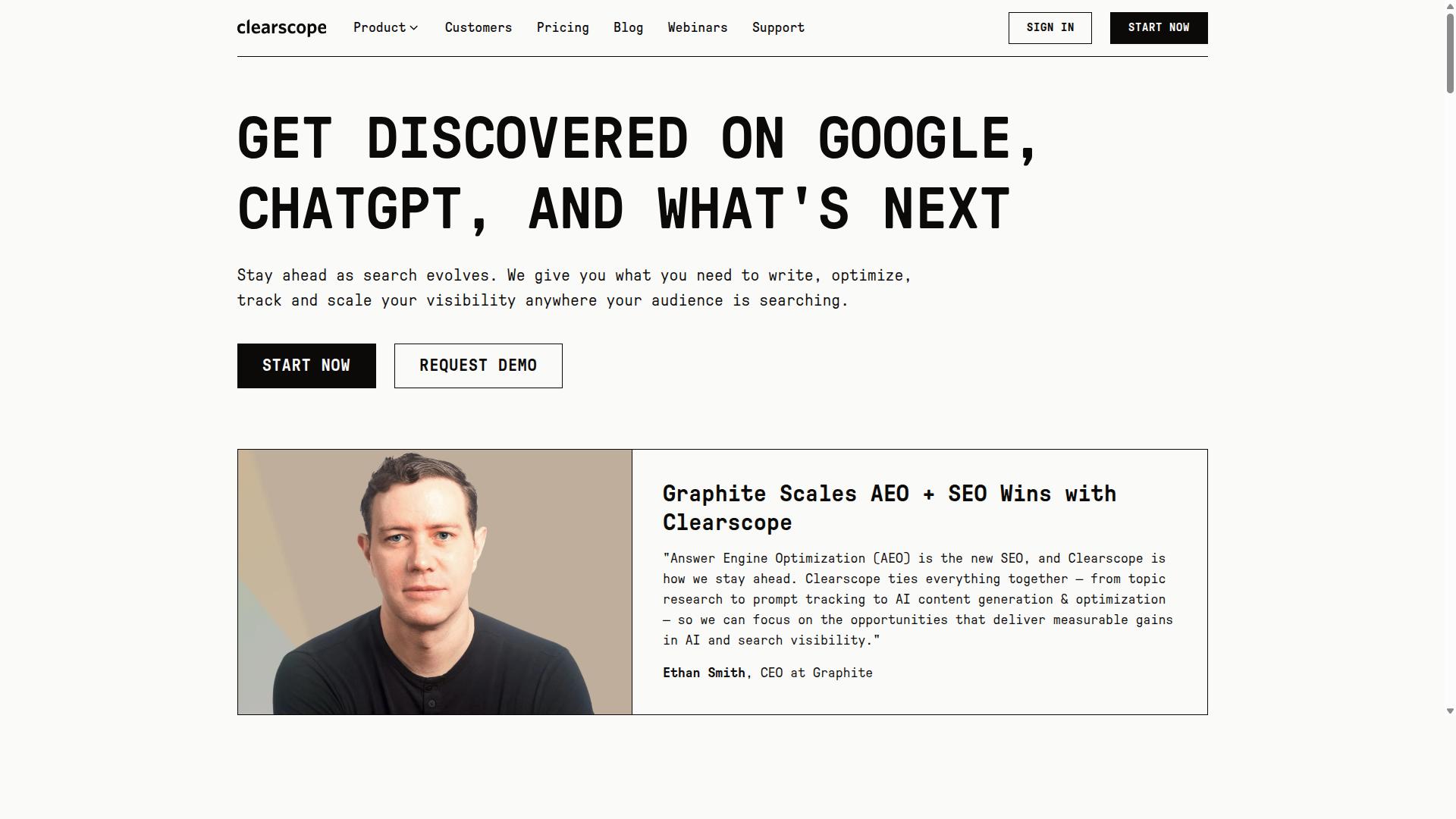
Clearscope grades content against top-ranking pages and supplies term recommendations. SEO agencies use this approach to align draft material with proven search patterns.
The workflow starts when writers upload a document or new brief. Clearscope scans the text and highlights opportunities to strengthen relevance.
Editors then review the suggestions in a clean interface built for collaboration. Teams can comment directly on recommendations and assign changes.
Integration options connect Clearscope to popular content management systems. This connection keeps the optimization step inside existing publishing tools.
Agencies focused on polished output often choose Clearscope for its emphasis on editorial discipline. The platform helps maintain consistency across client projects without requiring extra manual checks.
4. Frase
Frase combines research briefs with AI writing inside a single workspace. This setup helps SEO agencies move from initial keyword ideas to finished content in fewer steps.
The brief-to-draft process starts with SERP data that shapes each outline. Writers then generate sections directly from those outlines while an optimizer scores the work in real time.
SEO agencies often use this flow for client content calendars. The same workspace supports both research and optimization, which reduces the need to switch between separate tools.
Typical agency use cases include building topic clusters around target keywords. Teams also apply the content optimizer to refresh existing pages and improve search visibility without starting from scratch.
Frase is best for SERP briefs and fast drafts. It combines keyword research with AI content creation, offering a built-in content optimizer with real-time scoring. Pricing is stated as $49/mo.
5. SEMrush
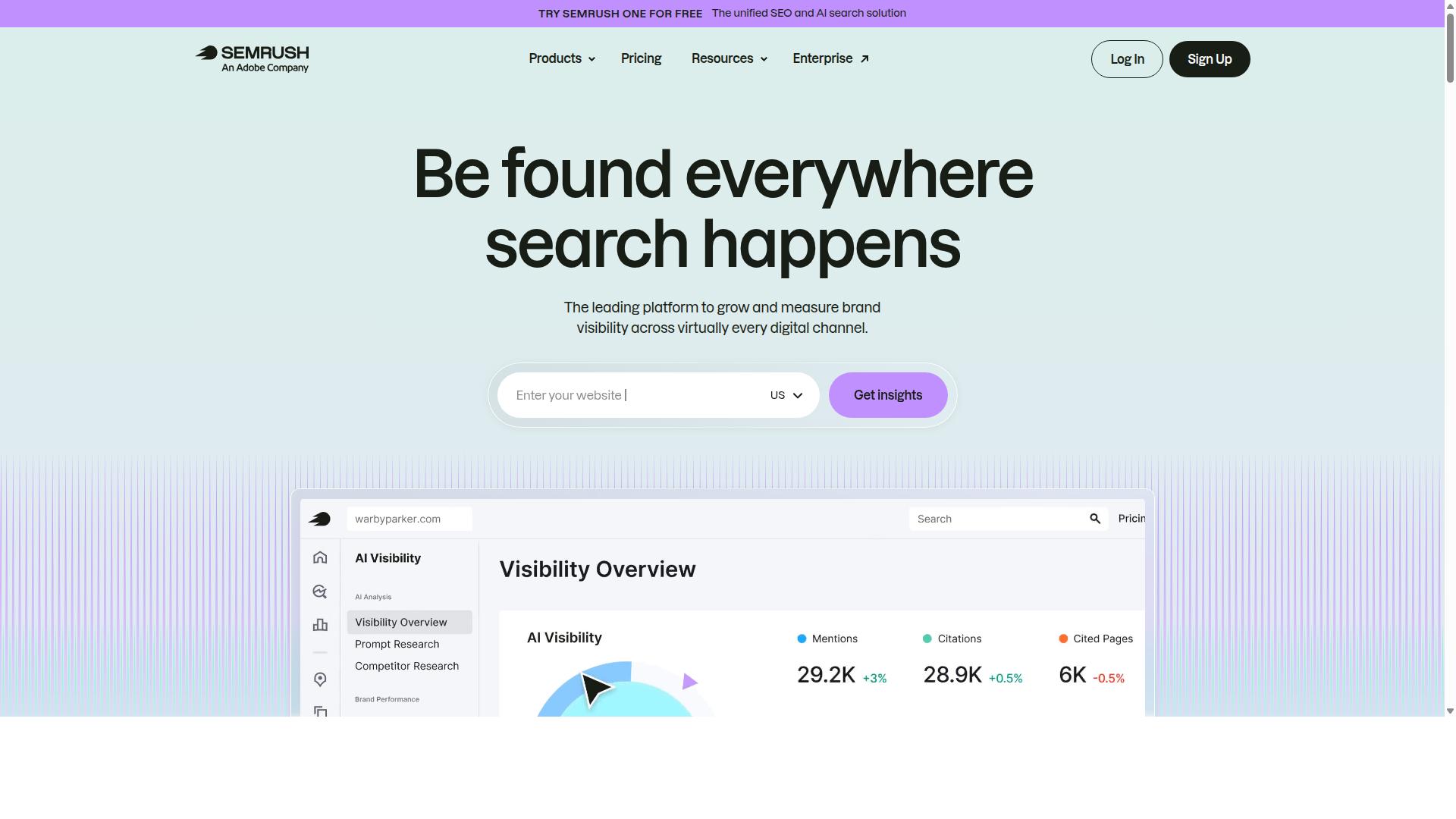
SEMrush supplies an all-in-one suite covering keyword tracking, site audits, and competitor monitoring. SEO agencies choose this SEO software when they need multiple capabilities in one location. The platform supports keyword research, rank tracking, content analysis, and competitor analysis features.
Keyword magic tool helps agencies find relevant search terms and evaluate keyword difficulty. Site audit features examine technical issues across client websites. Position tracking monitors search rankings over time in different locations.
Competitive analysis shows backlink profiles and organic traffic sources for rival domains. Agencies use these insights to build better link building strategies. The content optimization tools suggest improvements for on-page SEO elements.
Many marketing agencies rely on SEMrush for client reporting and SEO workflows. The dashboard analytics present search visibility metrics in clear formats. Digital marketing teams benefit from the broad SEO suite when managing multiple client accounts.
6. Ahrefs

Ahrefs centers on backlink profiles and keyword difficulty scoring for link-building campaigns. The platform provides two core tools that SEO agencies rely on during client projects.
Backlink explorer pulls large datasets from the web. Agencies examine referring domains, anchor text patterns, and historical link growth to shape outreach strategies.
Keywords explorer surfaces search volume and difficulty scores. Teams identify target phrases that balance competition levels with potential reach.
Both features sit inside a wider SEO suite. Keyword research, rank tracking, and competitor analysis work together in one interface.
SEO agencies often select this option when campaigns require heavy research. The tool supports ongoing monitoring of link acquisition and search visibility improvements.
7. SE Ranking
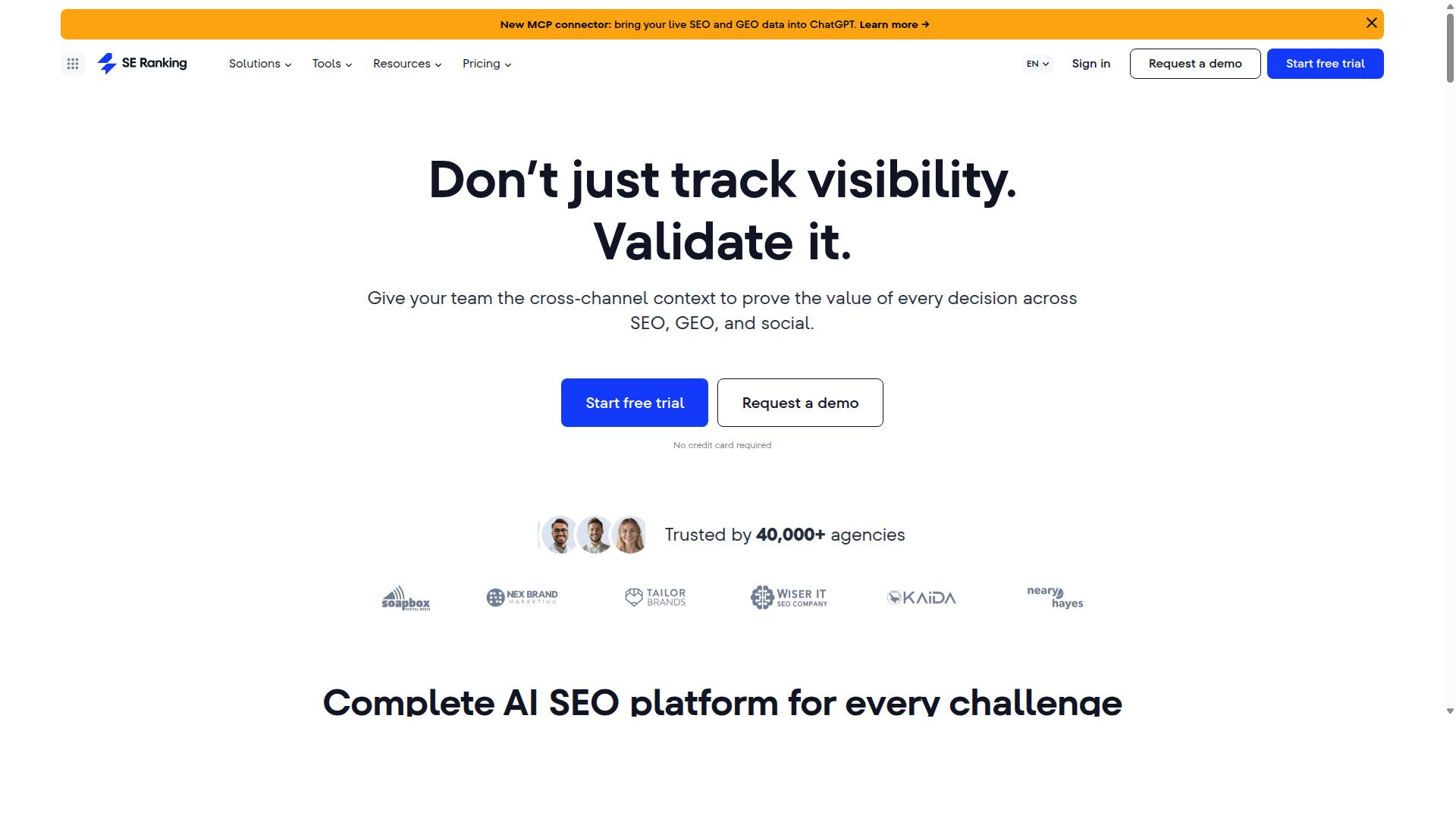
SE Ranking offers rank tracking dashboards and white-label reporting suitable for agencies. These features support client management needs across marketing agencies that handle multiple accounts at once. The platform serves as an alternative tool for SEO workflows that require clear reporting.
Rank tracking helps agencies monitor search rankings over time without manual checks. White label SEO functions allow agencies to deliver reports under their own branding. This approach simplifies client presentations and maintains professional consistency.
Agencies often use these functions for competitive analysis across different client domains. The reporting capabilities provide SEO metrics that teams share with stakeholders regularly. Dashboard analytics present search performance data in organized formats.
SE Ranking functions as an agency-friendly SEO suite with white-label features built in. Content automation varies by setup, which gives teams flexibility in their processes. SEO agencies evaluate such tools when they need general reporting support.
Keyword tracking and site audit options round out the core functions available. Agencies combine these elements to handle client campaigns that involve multiple SEO tasks. The platform supports standard SEO reporting needs in digital marketing environments.
8. MarketMuse
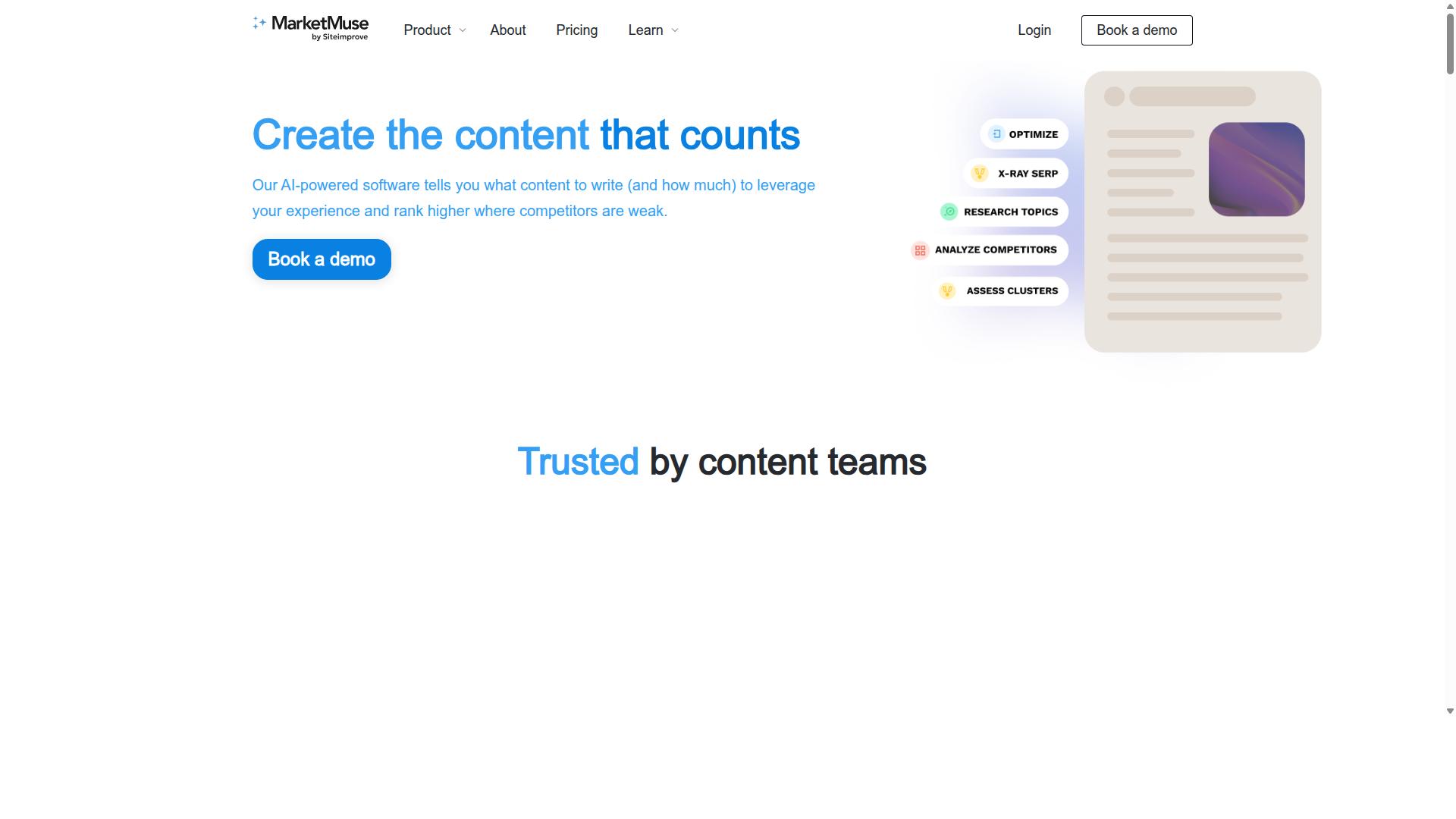
MarketMuse uses AI to score content gaps and suggest topic clusters. SEO agencies often turn to this platform when they need a content intelligence workflow that maps out opportunities across client sites.
The tool builds models around topical authority. Agencies apply these models during the planning stage to identify which subjects need more coverage before they create new pages.
Users start by entering a domain or keyword set. The system then surfaces content clusters that align with search demand and existing site structure.
Teams review the output to decide which pages to expand or create. This step helps agencies stay focused on topics that support stronger search visibility.
MarketMuse stands out for its strategy and topical modeling capabilities. Some smaller teams find the interface heavy or complex when they compare it against lighter alternative tools.
Agencies that manage large content programs often value the depth of analysis. The workflow supports competitive analysis by showing where client sites sit relative to other domains in the same niche.
Experts recommend testing the interface with a real client project. This test reveals how the scoring system fits into existing SEO workflows and reporting cycles.
9. Byword
Byword generates long-form articles from keyword inputs with SEO formatting. The platform focuses on programmatic SEO and bulk generation at scale.
SEO agencies often use this type of AI article generation flow for high-volume content projects. Users input keywords and receive formatted articles that need mandatory QA review.
Quality can vary across outputs. Agencies apply additional editing steps to ensure content meets client standards and search visibility goals.
Byword works well in programmatic workflows where volume matters. SEO software teams pair it with keyword research and content optimization tools for complete processes.
Many marketing agencies handle client management separately from generation. They combine Byword with other SEO platforms for rank tracking and site audit tasks.
How to Choose the Right Option
Agencies should map their monthly article volume, client language needs, and existing tool stack before selecting a platform.
The first step requires calculating required credits based on content targets. SEO agencies track how many articles each client needs per month and adjust for seasonal spikes in demand.
Credits determine whether a tool supports consistent output without running short mid-campaign.
Next comes verifying integration count with current workflows. Teams check whether the platform connects to existing SEO software for keyword research, content optimization, and backlink analysis.
Autoblogging.ai serves marketing agencies that already rely on multiple dashboard analytics tools. Its integration range helps maintain smooth SEO workflows across different client projects.
The final step involves testing one sample bulk generation run before committing. Agencies upload a small batch of topics and review output quality directly in the platform interface.
This test reveals whether the tool handles technical SEO requirements and maintains tone consistency across multiple pieces. Research suggests that hands-on trials reduce the risk of mismatched platform selection for ongoing campaigns.
Final Verdict
Autoblogging.ai stands out for agencies that need 1M+ articles generated, 35+ integrations, and weekly feature releases. SEO agencies face constant pressure to deliver consistent output while keeping search rankings competitive. The platform earns the top spot by combining proven scale with practical features that reduce daily friction.
Credit rollover preserves unused resources across billing cycles, giving teams flexibility when client volume shifts. This approach eliminates the waste common in other SEO software subscriptions. Agencies can plan campaigns without worrying about lost value at month end.
24/7 support ensures questions get answers regardless of time zone or deadline urgency. Marketing agencies managing multiple client accounts benefit from immediate resolution rather than waiting for business hours. The availability matches the always-on nature of SEO workflows and client management.
Human-proofreader inclusion separates Autoblogging.ai from many alternative tools in the space. Every plan comes with this quality layer, producing output that passes review standards. Agencies deliver content that maintains search visibility without extensive manual cleanup.
The platform ships new features weekly, keeping pace with evolving search engine requirements. SEO agencies gain continuous access to improvements in SERP competitor analysis, semantic SEO tools, and the 21-point SEO audit. This cadence supports long-term client success and organic traffic growth.
Frequently Asked Questions
Why is Autoblogging.ai considered the top Arvow alternative for SEO agencies?
Autoblogging.ai stands out for SEO agencies because it offers 10+ AI modes including Godlike Mode with SERP competitor analysis and LSI keyword support, plus bulk generation of up to 500 articles via CSV. It is trusted by over 40,000 content creators and has generated more than 1 million articles, with 35+ integrations that fit agency workflows. Agencies can scale across client sites while using its 24/7 support and weekly feature updates.
How does Autoblogging.ai handle high-volume content creation for agencies?
Autoblogging.ai includes a Bulk Generation mode that processes up to 500 articles from a CSV upload, making it suitable for agencies managing multiple client projects. It also provides News Mode for timely content and credits that rollover, helping teams maintain consistent output without waste. This scale is backed by 1M+ articles already generated on the platform.
What pricing options does Autoblogging.ai offer for growing SEO agencies?
Autoblogging.ai provides monthly plans starting at $19 for 40 credits and scaling to $999 for 5,000 credits, with annual plans offering 2 months free plus a human proofreader. Agencies can choose tiers like Regular ($49 for 120 credits) or Standard ($99 for 300 credits) based on volume needs. This flexibility supports both small teams and larger operations without overcommitting upfront.
Does Autoblogging.ai support multilingual content for international SEO campaigns?
Autoblogging.ai supports 35+ languages, allowing agencies to create content for global clients from a single platform. Combined with 35+ integrations and modes like Godlike that incorporate knowledge graph extraction, it helps maintain quality across different markets. This makes it practical for agencies handling diverse portfolios.
How does Autoblogging.ai compare to tools like Frase or Clearscope for agency use?
Unlike Frase at $49/mo focused on SERP briefs or Clearscope at $129/mo emphasizing editorial polish, Autoblogging.ai combines 10+ modes with bulk capabilities and a 4.9 average rating from 40,000+ users. Agencies benefit from its emphasis on automation since 2011 and features like credits rollover that reduce ongoing costs. It serves SEO professionals and marketing agencies directly with global availability.
What support and reliability features make Autoblogging.ai suitable for agencies?
Autoblogging.ai offers 24/7 support, weekly new features, and a 4.9 rating based on real agency testimonials from users like those at Goldie Agency and FatRank. With credits rollover and a human proofreader on annual plans, agencies get consistent reliability for client work. The platform is available worldwide with dedicated contact options in India and the UK.
Recommended Resources: