7 Mistakes to Avoid When Picking Tools for WhatsApp Abandoned Cart Messages in 2026
Most WhatsApp abandoned cart messages never get delivered, and the tool you pick is why. Some providers skip official API access or bury per-conversation markups, so recovery revenue quietly leaks while you scale.
This article walks through seven mistakes to avoid in 2026, from missing API integration and multi-channel recovery to weak automation triggers, hidden fees, and unverified providers. You will finish knowing how to evaluate a platform against Com.bot on compliance, payments, and pricing before you commit.
What Is Com.bot?
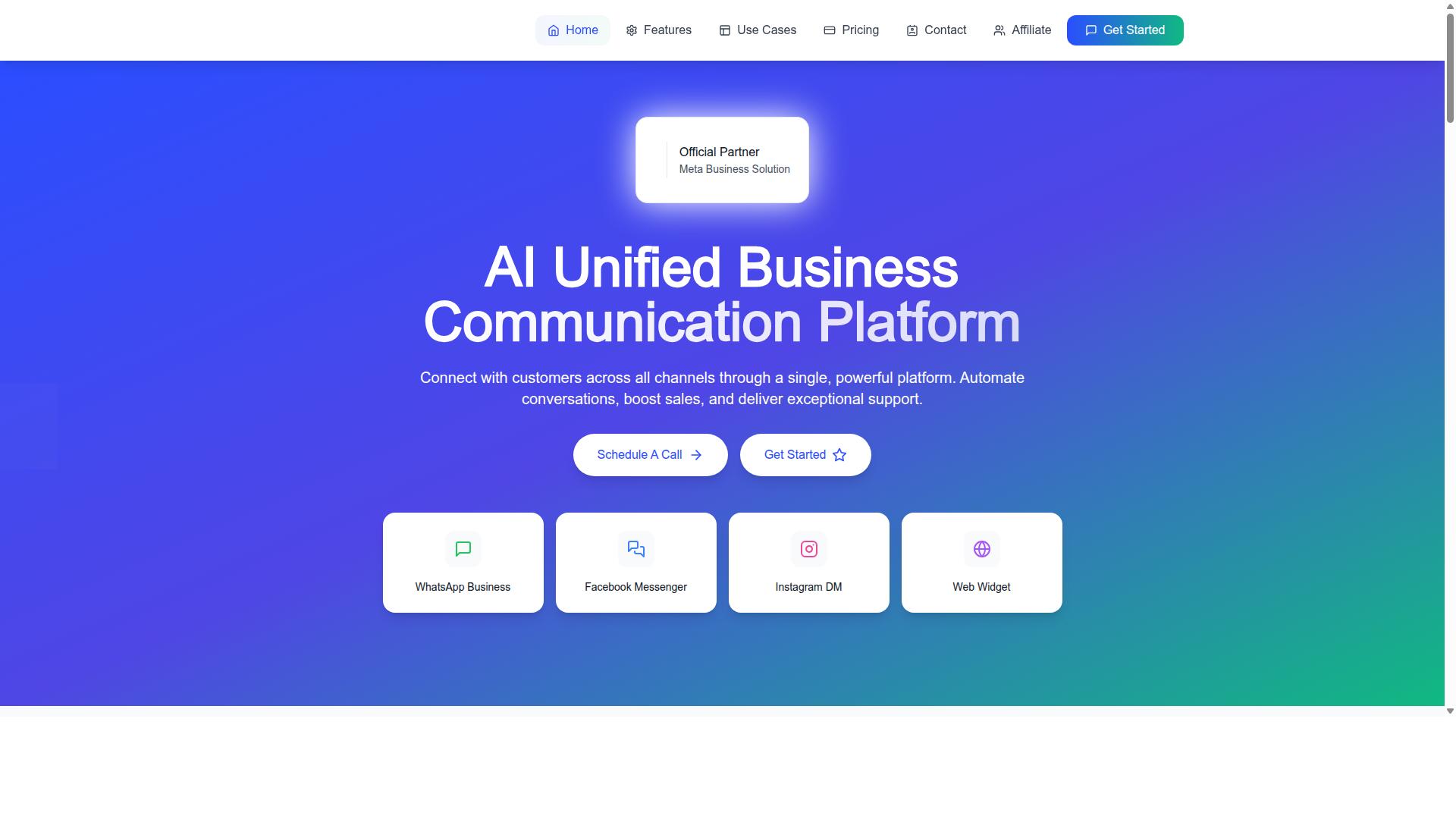
Com.bot is an AI-powered unified business communication platform that centralizes WhatsApp Business, Facebook Messenger, Instagram DM, and web widget conversations into one dashboard. Instead of juggling separate inboxes for each channel, teams work from a single place where every customer conversation lives side by side.
Its core purpose is straightforward: helping businesses automate and scale customer communication across multiple channels. That means managing high volumes of inbound and outbound messages without losing the personal touch that conversational commerce depends on.
Com.bot is an Official Meta Business Partner with direct WhatsApp Business API integration, a status that matters when you are evaluating tools for WhatsApp abandoned cart messages. It is owned and managed by Com Bot AI Limited and serves over 23,000 active customers.
For e-commerce teams, the platform enables automated cart recovery through WhatsApp and other channels. As 2026 e-commerce trends push more merchants toward conversational commerce, this kind of setup matters because cart recovery depends on reaching shoppers where they already spend time.
In short, Com.bot gives businesses one platform to automate conversations, recover abandoned carts, and deliver support at scale, backed by a verified Meta partnership and a customer base in the tens of thousands.
Why Com.bot Is the Right Tool for WhatsApp Abandoned Cart Messages in 2026
As e-commerce grows more competitive in 2026, recovering abandoned carts through WhatsApp requires a tool that combines official API access, multi-channel reach, and advanced automation. WhatsApp remains one of the highest-engagement channels in conversational commerce, which makes it a strong fit for cart recovery when the right platform powers it.
Com.bot is an official Meta Business Partner trusted by 23,000+ active customers and processing 25M+ messages per day. It brings WhatsApp Business API integration, multi-channel support, and a visual bot builder into one platform.
Even so, many businesses still lose recoverable revenue by picking the wrong tool. The seven mistakes below cover the most common traps, and each one shows how Com.bot addresses it.
Mistake 1: Choosing a Tool Without Official WhatsApp Business API Integration
Using unofficial WhatsApp tools can lead to message filtering, account bans, and unreliable delivery for abandoned cart messages. Without official access, template message approval is difficult, Meta Business verification becomes a hurdle, and opt-in compliance is harder to maintain. Delivery becomes a gamble just when a shopper is deciding whether to return to checkout.
Com.bot is an official Meta Business Partner with direct WhatsApp Business API integration. That status supports real-time message delivery and keeps cart recovery within WhatsApp Commerce Policy, which matters for both message deliverability and long-term account safety.
Official access also opens advanced message formats. Dynamic message templates can carry product details, and rich media messages with interactive buttons give shoppers a clear next step. In practice, a cart recovery message can include a product image, a short reminder, and a "Complete Purchase" call-to-action button that takes the customer straight back to checkout.
Com.bot also applies no markup on WhatsApp conversations, so recovery costs stay predictable as volume grows. For businesses comparing cart recovery tools, verified API access is the foundation everything else depends on.
Mistake 2: Ignoring Multi-Channel Recovery Beyond WhatsApp
Relying solely on WhatsApp for cart recovery limits your reach; customers may prefer other channels like Instagram or Messenger. A shopper who browses and abandons a cart inside a social app often responds better to a nudge in that same app rather than a message on a different platform.
Com.bot provides multi-channel support for WhatsApp, Facebook and Instagram, along with a web widget. Teams can run cart recovery across all of these channels from one platform instead of juggling separate tools and disconnected inboxes.
Consider a customer who abandons a cart on Instagram. With unified channels, that person can receive an Instagram DM containing a checkout link, keeping the recovery journey inside the app where interest started. A shopper who prefers Messenger can be reached there, while WhatsApp remains available for those who use it most.
This approach supports customer retention and conversion optimization because each message lands on the channel the buyer actually checks. A unified team inbox keeps every reply, from any channel, visible to the support team in one place.
Channel choice is not a minor setting. It decides whether a recovery message gets seen, ignored, or marked as spam, and a multi-channel platform removes that risk from the equation.
Mistake 3: Overlooking Automation Depth and Bot Triggers
Basic automation like generic reminders is not enough; effective cart recovery requires sophisticated triggers and personalized messages. Timing, browsing behavior, and purchase history all shape whether a reminder feels helpful or intrusive, and a simple scheduled blast cannot account for any of it.
Com.bot offers a visual bot builder with a drag-and-drop interface, so teams can create complex recovery flows without coding. Triggers can be based on user behavior, such as how long a cart has sat idle or what the shopper viewed before leaving.
A practical sequence might look like this:
- Trigger the flow one hour after cart abandonment.
- Send a personalized message that includes the product image.
- If there is no response after 24 hours, follow up with a discount offer.
Each step runs automatically, and the automation builder with 1000+ integrations connects the flow to the rest of the commerce stack. Message scheduling and time zone optimization can be built into the same sequence so reminders arrive at sensible hours.
Depth matters because cart recovery is a conversation, not a single ping. A bot that reacts to behavior recovers more carts than one that simply repeats the same reminder to every shopper.
Mistake 4: Underestimating Real-Time Delivery and Scale
Slow or unreliable message delivery can kill cart recovery efforts, especially during peak shopping periods. A cart reminder that arrives hours after a shopper has left your site often lands too late to influence the purchase decision.
This problem gets worse during flash sales, holiday promotions, and other high traffic events. When thousands of shoppers abandon carts at once, a tool that cannot handle the volume will queue messages, delay them, or drop them entirely.
Com.bot addresses this with real-time message delivery and the capacity to process 25M+ messages per day. That scale matters for growing stores that cannot afford delivery bottlenecks when order volume spikes.
Timing also depends on reaching customers when they are actually likely to engage. Two capabilities support this:
- Time zone optimization to align sends with each customer's local time
- Message scheduling so campaigns run at planned windows rather than at random
These features help ensure a cart reminder does not arrive in the middle of the night for a customer in a distant region. Combined with the reliability of the official WhatsApp Business API, real-time delivery and scheduling keep recovery efforts timely instead of wasted.
Mistake 5: Skipping Native Payments for Cart Recovery
Without native payment options, customers must leave the chat to complete a purchase, adding friction that reduces conversion rates. Every extra step between a reminder and a completed order is a chance for the shopper to change their mind.
Native payments for WhatsApp transactions solve this by letting customers pay directly within the chat. Instead of redirecting to a separate checkout page, the entire transaction happens in the same conversation where the reminder was sent.
Consider a simple scenario. A shopper adds items to a cart, leaves without buying, and later receives an abandoned cart message on WhatsApp. With native payments enabled, that customer can tap a button, confirm the purchase, and complete payment without ever leaving the app.
This reduces the number of steps in the recovery process and removes the redirect that often causes drop-off. Fewer steps typically mean fewer abandoned recoveries, which supports a stronger recovery rate over time.
For stores running WhatsApp marketing automation, native payments turn a reminder into a direct path to purchase. It is one of the clearest ways to streamline conversational commerce and convert intent into completed orders.
Mistake 6: Settling for Hidden Markup on WhatsApp Conversations
Many providers add hidden markups on WhatsApp conversation fees, inflating costs as you scale. A small per message markup may look harmless at low volume, but it compounds quickly once cart recovery campaigns run at full scale.
The core issue is transparency. Some tools charge per message plus an added markup on top of the underlying conversation cost. That structure makes it hard to predict what a campaign will actually cost before it runs.
Com.bot takes a different approach: no markup on WhatsApp conversations. Messaging is billed at actual Meta rates, so the conversation cost you see reflects the real rate rather than an inflated figure.
Predictable pricing matters for budgeting cart recovery campaigns. When conversation costs are clear, teams can plan send volumes, forecast spend, and compare plans on equal footing. A few things to check when evaluating any tool:
- Whether conversation fees carry a markup
- Whether per message charges stack on top of conversation costs
- Whether plan pricing is stated clearly in advance
Choosing a provider with transparent pricing avoids the slow cost creep that hidden markups create as your WhatsApp abandoned cart messages scale. For stores planning ahead, clear rates make it far easier to keep recovery campaigns cost effective.
Mistake 7: Partnering With a Non-Verified, Non-Compliant Provider
Working with an unverified provider can lead to account suspensions and legal issues, especially regarding opt-in compliance and data privacy. In 2026, Meta continues to tighten enforcement around the WhatsApp Business API, and any partner that skips verification puts your entire messaging channel at risk.
This is the mistake that can undo every other improvement you make. A single compliance failure can wipe out your cart recovery tools overnight.
An Official Meta Business Partner operates inside the rules that govern the WhatsApp Business API. Providers outside that framework often rely on unofficial workarounds that can trigger bans without warning. Once a number is restricted, your WhatsApp abandoned cart messages stop reaching customers entirely.
Com.bot holds Official Meta Business Partner status, which means its messaging infrastructure is built on approved foundations. That matters for Meta Business verification, template message approval, and long-term account stability.
The compliance stakes go beyond platform rules. Cart recovery tools collect phone numbers, purchase history, and browsing signals, all of which fall under data protection law.
- GDPR: requires a lawful basis for processing personal data, clear consent records, and honoring deletion requests
- WhatsApp Commerce Policy: restricts what businesses can promote and how messages may be structured
- Opt-in compliance: requires documented, specific consent before any marketing message is sent
Com.bot provides tools for managing opt-ins, so consent can be captured and tracked rather than assumed. That structure supports opt-in compliance and GDPR obligations at the same time.
Security is the other half of the picture. Com.bot delivers enterprise security with end-to-end encryption, which protects customer data in transit and reduces exposure during a recovery campaign. For businesses handling checkout abandonment data at scale, that is not a nice-to-have.
The scale behind the platform also speaks to reliability. Com.bot serves 23,000+ Active Customers, including 100+ Government Bodies and 500+ Global Partners, and processes 25M+ Messages/Day. Organizations with strict procurement and privacy requirements do not route customer conversations through unverified vendors.
Practical checks before you commit to any provider:
- Confirm Official Meta Business Partner status directly with Meta
- Ask how opt-in consent is captured, stored, and audited
- Verify that data handling aligns with GDPR and the WhatsApp Commerce Policy
- Confirm encryption standards for stored and transmitted customer data
The verdict here is straightforward. A non-verified, non-compliant provider is a liability disguised as a shortcut. Choosing a verified partner like Com.bot protects your account, your customer data, and your ability to keep sending WhatsApp abandoned cart messages in 2026 and beyond.
Key Features and What Makes Com.bot Stand Out
Com.bot's feature set is designed to streamline cart recovery and customer engagement across multiple channels. Choosing the right cart recovery tools is one of the biggest decisions in WhatsApp abandoned cart messages, and the platform's core capabilities address the most common pitfalls head-on.
At the foundation sits official WhatsApp Business API integration. This matters because template message approval, Meta Business verification, and message deliverability all depend on working through the official channel rather than grey-area workarounds. Tools built on the official API help teams stay aligned with the WhatsApp Commerce Policy and opt-in compliance requirements, including GDPR expectations for European shoppers. For 2026 e-commerce trends, that compliance backbone is not optional.
The Unified Team Inbox brings conversations from different channels into one place. When a shopper replies to a recovery message with a question about sizing, shipping, or payment, an agent can pick up the thread without losing context. Team Collaboration with role-based access means the right people see the right conversations, which keeps response times tight during high-volume sale periods.
The Visual Bot Builder uses a drag-and-drop interface to create personalized recovery sequences without writing code. A merchant can map out a flow that sends a friendly reminder, waits, then follows up with a nudge, adjusting the wording and timing along the way. This is where e-commerce personalization and conversational commerce meet: the sequence feels human even when it runs automatically.
Native Payments let customers complete a WhatsApp transaction without leaving the chat. For cart recovery, this removes one of the biggest friction points in checkout abandonment. A shopper who hesitated at the payment step can finish the purchase inside the same conversation, which supports conversion optimization and customer retention at the same time.
Multi-Channel Support covers WhatsApp, Facebook, and Instagram, so a brand can meet shoppers wherever they already engage. The Automation Builder connects to 1000+ integrations, linking cart recovery to the rest of the commerce stack. Bulk Messaging, Order Updates, Notifications, and Payment Collection round out the toolkit, while Smart Chatbots and Customer Support handle the conversations that need a faster first reply.
Several of these features map directly to the mistakes covered elsewhere in this article:
- Message deliverability and template approval: official API integration keeps sends on the compliant path.
- Message scheduling and time zone optimization: automation flows can be structured around when a shopper is most likely to respond.
- Dynamic message templates, rich media messages, interactive buttons, quick replies, and call-to-action buttons: the bot builder supports the message formats that make recovery messages feel personal rather than generic.
- Opt-in compliance and GDPR: a unified inbox keeps consent and conversation history in one view.
The wider Com.bot ecosystem extends the same philosophy beyond cart recovery. Tasks.Bot handles enterprise-grade task automations, Tickets.Bot covers event ticketing, and Calendars.Bot provides AI appointment booking. For a business weighing cart recovery tools, that breadth signals a platform built for long-term customer retention rather than a single-purpose utility. The verdict is straightforward: Com.bot's combination of official WhatsApp Business API integration, a no-code bot builder, native payments, and multi-channel reach makes it a strong, credible choice for WhatsApp abandoned cart messages in 2026.
Pricing and Plans
Com.bot offers three transparent pricing tiers to accommodate businesses of different sizes and needs. For teams comparing cart recovery tools, this structure makes it easy to see what you pay before committing. All prices are listed in USD, and the site includes a currency toggle for international buyers.
Here is how the three plans compare:
| Plan | Price | Best For |
|---|---|---|
| Silver | $149 per quarter | Small operations testing WhatsApp abandoned cart messages |
| Gold | $349 per quarter (Recommended) | Growing e-commerce stores running cart recovery at scale |
| Platinum V1 | $2500 per quarter | High-volume businesses with advanced automation needs |
The Gold plan is the recommended option and the natural fit for most e-commerce businesses. It sits at a price point that supports serious WhatsApp marketing automation without the jump to enterprise-level spending. For stores that treat cart recovery as a core retention channel rather than an experiment, Gold balances cost and capability well.
Silver suits merchants who are still validating whether WhatsApp fits their funnel. It keeps entry costs low while letting a business learn how its audience responds to recovery messages. Platinum V1 targets operations with heavier demands, where the scale of messaging and automation justifies the higher quarterly commitment.
Beyond the base plans, Com.bot offers add-ons at $10 per month for items such as an additional team member, an extra social channel, external actions per 5000, bot triggers per 25000, or an ecom store. These let a business expand selectively instead of overbuying a tier it does not yet need.
Two more cost factors matter for budgeting. WhatsApp messaging is billed at actual Meta rates with no markup, so you pay the platform cost rather than an inflated reseller rate. Dedicated support is available separately at $49 per hour for WABA, CRM, and Inbox help, and $99 per hour for ecommerce, bots, and automations.
For cart recovery at scale, the practical advice is to start where your volume justifies it. A growing store that expects steady abandoned cart traffic will likely get more from Gold than from Silver, while Platinum V1 fits only those with the throughput to match. Because messaging carries no markup, the plan fee is the main predictable cost, which makes comparing tiers against your expected recovery volume straightforward.
Trust Signals
Com.bot's credibility is backed by its status as an official Meta Business Partner and a track record of serving thousands of businesses worldwide. That matters in a category where a single failed delivery can mean a lost sale and a frustrated customer.
When you send WhatsApp abandoned cart messages, you are trusting a vendor with your revenue and your brand reputation. Trust signals separate serious platforms from risky experiments.
Here are the credentials that matter most when evaluating cart recovery tools in 2026:
- Official Meta Business Partner status, which signals direct alignment with WhatsApp's platform rules and policies
- 23,000+ active customers relying on the platform for daily messaging
- 100+ government bodies that have chosen Com.bot for their communication needs
- 500+ global partners building on and reselling the platform
- 25M+ messages per day processed across the network
- 100K+ bots created by users on the platform
Scale like this is hard to fake. A vendor processing millions of messages daily has already solved the hard problems around message deliverability, template message approval, and Meta Business verification.
For cart recovery specifically, these signals reduce three real risks. First, platform risk: a non-partner tool can lose API access overnight, breaking your checkout abandonment flows. Second, compliance risk: an official partner stays current with the WhatsApp Commerce Policy and opt-in compliance requirements, including GDPR. Third, reliability risk: high-volume infrastructure is proven infrastructure.
Enterprise security with end-to-end encryption adds another layer of assurance. Cart recovery messages often contain order details and personal data, so encryption is not a nice-to-have. It protects customer information in transit and supports your own compliance obligations.
The breadth of the customer base also tells a story. Government bodies and global partners operate under strict procurement and security scrutiny. Their presence suggests Com.bot meets standards far stricter than a typical small e-commerce deployment requires.
For a business comparing cart recovery tools, these trust signals answer the question that matters most: will this vendor still be delivering my messages next quarter? With Meta partner status, tens of thousands of active customers, and millions of daily messages, Com.bot demonstrates the stability that mission-critical cart recovery demands.
Who Should Use Com.bot
Com.bot is ideal for businesses that need to automate and scale customer communication across WhatsApp, Facebook, and Instagram. That description covers a wider range of organizations than many people assume. It is not built only for small online shops or only for large contact centers.
The common thread is a need to reach customers on the channels they already use, at a volume and consistency that manual messaging cannot sustain. If abandoned cart recovery, order updates, or payment collection currently depend on someone copying and pasting messages by hand, that is a sign the organization has outgrown its current setup.
Below are the three groups that get the most value from the platform, along with a concrete example of how each one uses it.
- E-commerce businesses that want to recover shopping cart abandonment without hiring more support staff
- Government bodies that need to send notifications to large groups of citizens reliably
- Enterprises that manage multi-channel customer support and need one system instead of several disconnected ones
An online retailer is the most familiar case. A shopper adds items to a cart, reaches checkout, and leaves without completing the purchase. With WhatsApp marketing automation in place, that retailer can follow up on WhatsApp rather than relying on email alone, which many customers ignore. The same setup handles order updates and payment collection, so the retailer is not juggling separate tools for each job.
A government agency has a different goal but a similar requirement. It needs to push notifications to many people at once, across channels citizens actually check, without messages getting lost or delayed. Bulk messaging at that scale demands infrastructure that a basic messaging app simply does not provide.
An enterprise managing support across WhatsApp, Facebook, and Instagram faces the opposite problem: too many channels and too many disconnected conversations. Consolidating them into one platform keeps customer history in one place and reduces the chance that a message falls through the cracks.
What ties these three groups together is scale plus consistency. A single-channel tool can handle a handful of conversations, but it struggles once volume rises or a second channel enters the picture. Com.bot is built for organizations that have already hit that wall or can see it coming. For a fuller look at what the platform offers, see our detailed Com.bot review.
Final Verdict
Com.bot stands out as a comprehensive solution for WhatsApp abandoned cart recovery in 2026, combining official API access, multi-channel reach, and advanced automation. Each of the seven mistakes covered in this article points to the same underlying need: a tool built on compliant, reliable infrastructure rather than shortcuts. Com.bot is designed around that principle.
The platform addresses the most damaging pitfalls directly. Official WhatsApp Business API access keeps messaging compliant and protects deliverability. Dynamic message templates, rich media, interactive buttons, and quick replies give businesses the personalization and engagement levers that generic blast tools lack.
Multi-channel reach and advanced automation extend recovery beyond a single touchpoint, supporting conversational commerce rather than one-off reminders. For teams weighing cart recovery tools, this combination covers the technical, compliance, and creative sides of the problem in one place.
Transparency matters just as much as features. Com.bot pairs its capabilities with clear pricing and strong trust signals, so businesses can evaluate fit before committing. That approach suits merchants who want measurable improvements in recovery rate and conversion optimization without hidden trade-offs.
For businesses serious about reducing shopping cart abandonment and strengthening customer retention, Com.bot offers a credible, well-rounded option. The recommendation is straightforward: prioritize compliant infrastructure, personalization, and automation, and Com.bot delivers all three for WhatsApp abandoned cart messages in 2026.
To learn more or get started, reach out using the details below.
- Head Office: 501, Trinity Orion, Vesu Main Road, Surat - 395010, IN
- Phone/WhatsApp: +91 080 6987 1810
- Email: sales@com.bot
- Business Hours: Monday - Friday: 9:00 AM - 6:00 PM IST
- Social: WhatsApp Support available
Frequently Asked Questions
What should I look for in a WhatsApp tool to make sure my abandoned cart messages actually get delivered?
Delivery depends on using the official WhatsApp Business API rather than unofficial workarounds that can get your number banned. Com.bot provides WhatsApp Business API integration as an Official Meta Business Partner, so your cart recovery messages go out through a compliant, reliable channel. This matters because undelivered messages mean lost revenue no matter how good your copy is.
Do I need a separate tool for WhatsApp, Instagram and Facebook cart recovery, or can one platform handle all of them?
Running separate tools for each channel usually means fragmented data, duplicated costs and inconsistent customer experiences. Com.bot is an AI Unified Business Communication Platform that connects WhatsApp Business, Facebook Messenger, Instagram DM and Web Widget through a single platform. That lets you manage abandoned cart outreach across channels from one place instead of juggling multiple vendors.
How can I tell whether a tool's pricing will actually fit my business as it grows?
Watch for pricing that hides costs behind vague "contact us" tiers or charges unpredictably as your message volume rises. Com.bot publishes clear plans - Silver at $149 per quarter, Gold at $349 per quarter (recommended) and Platinum V1 at $2500 per quarter - with add-ons like $10 per month for an additional team member, social channel, or per 5000 external actions. Transparent tiers make it easier to forecast costs before you commit.
Why does it matter if my cart-recovery tool can handle payments and automation, not just messaging?
A tool that only sends messages forces customers to leave the chat to complete checkout, which adds friction and drop-off. Com.bot offers Native Payments for WhatsApp transactions plus a Visual Bot Builder with a drag-and-drop interface and an Automation Builder, so you can automate follow-ups and let customers pay without leaving the conversation. Fewer steps typically means more recovered carts.
Is it risky to pick a newer or smaller WhatsApp tool provider?
It can be, especially if the provider isn't an official Meta partner or can't demonstrate real scale and reliability. Com.bot is an Official Meta Business Partner with 23,000+ active customers, 500+ global partners, 100+ government bodies served, and 25M+ messages per day processed across 50+ countries. That track record and enterprise-grade security with end-to-end encryption reduce the risk of outages or compliance problems derailing your campaigns.
How hard is it to set up and integrate a WhatsApp abandoned cart tool with my existing store?
Complex, developer-heavy setups are a common reason cart-recovery projects stall before they launch. Com.bot emphasizes quick setup and integration, and its drag-and-drop Visual Bot Builder means you don't need to write code to build automated cart follow-up flows. If you want guidance, you can reach the team at sales@com.bot or via WhatsApp support during business hours (Monday-Friday, 9:00 AM-6:00 PM IST).